1. Arriving in Aarhus with Empty Hands and Open Eyes
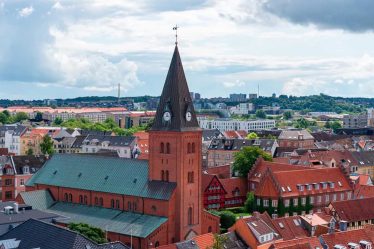
The morning I arrived in Aarhus, a faint northern light bathed the quiet streets in a soft, steely glow. The city didn’t shout its presence. Instead, it gently pulled me in, like an old book whose first line compels you not with drama but with grace. I stepped out of the train station and into a city that felt both intimate and expansive. There was no chaos here—just cobblestone streets, well-kept facades, cyclists gliding past with rhythm, and the crisp scent of the sea in the distance. The day was open, and I carried no plan except a longing to find something quiet and real—something printed, brewed, and bound.
My first instinct was to find a bookshop. Not just for books, but for the kind of atmosphere where one could browse slowly, ask questions, and perhaps sit with a cup of coffee while thumbing through a poetry collection. And maybe, in some small corner, find a new notebook—blank, waiting. Aarhus, as I would learn, is an ideal city for such a day.
2. The Bookstore That Feels Like a Living Room: Løve’s Bog- og Vincafé
I didn’t find Løve’s. It found me. On a quiet street just off the more trafficked areas near Møllestien, I noticed a dark green façade framed with wood, with large windows revealing candle-lit tables and shelf after shelf of books. The sign read Løve’s Bog- og Vincafé—a book and wine café. I stepped inside and was immediately surrounded by quiet conversation, clinking glasses, and the rustle of pages.
This was not a bookstore built for efficiency. It was built for lingering.
Wooden tables were scattered with open books and wine glasses. Couples leaned in over shared volumes. A woman at the window was writing in a leather notebook, her espresso cooling beside her. I wandered to the back, past poetry anthologies and shelves of Danish history, and found a section dedicated to philosophy and world literature. I pulled out a volume of Søren Kierkegaard’s journals, half expecting it to be in Danish, but to my delight it was an English translation. It felt fitting to begin the trip with him—Aarhus, after all, is a place where Danish thought still breathes through architecture and the arts.
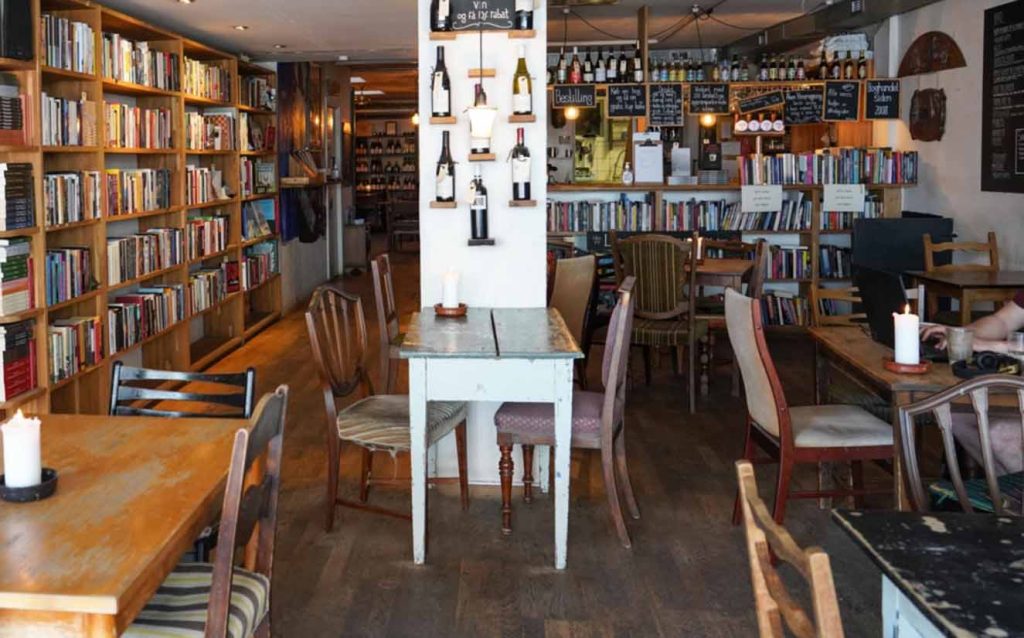
After settling in with an espresso and the Kierkegaard volume, I let time fall away. There is a specific kind of joy in reading among strangers who also love books—not performance, but quiet companionship. Løve’s felt like the kind of place I could return to every day and never repeat the same experience twice.
3. Bøger & Papir: The Unexpected Stationery Trove
I wandered into Bøger & Papir looking for a mechanical pencil. I left with a stack of heavy notebooks, a linen-bound sketchbook, a pack of ink refills, and—strangely—an unexpected appreciation for Danish paper design.
The store is located near the Latin Quarter, tucked between a flower shop and a café that serves what might be the city’s flakiest croissant. At first glance, Bøger & Papir seemed like any standard paper shop. But inside, the layout was as much about aesthetic pleasure as it was about utility. The shelves were neat but not sterile. There was warmth in the choice of display: kraft-paper journals in one corner, hand-sewn notebooks on a central island, and pens arranged with such care that I spent nearly twenty minutes testing the nibs of each before settling on a brass fountain pen.
The staff didn’t rush. They offered opinions when asked and left me to my rituals when I needed silence. I sat at a small test desk near the back and began writing in one of the new notebooks. The paper was slightly textured, ideal for fountain pen ink. Outside, a light rain began to fall, casting the shop in a gray-blue light.
I carried the new supplies in a canvas bag, feeling oddly reassured by their presence. There’s something grounding about having the tools for thought close at hand.
4. The Art of Slowness at ARoS Art Bookshop
Aarhus is home to one of the most striking modern art museums in Scandinavia—ARoS. And while the art inside deserves all the praise it receives, I found myself drawn most intensely to its bookshop.
Situated just beyond the museum café, the ARoS bookshop is a minimalist space, flooded with natural light. The selection here is curated with an eye for the unusual and the inspiring. Art theory, architecture, fashion photography, graphic design—all represented in heavy, beautifully printed volumes. But what caught my eye first was a book on the Japanese concept of wabi-sabi—a philosophy of beauty found in imperfection. Leafing through the book, I noticed how every page seemed to breathe. The photography was quiet and meditative. It mirrored how the city itself had begun to feel.
I purchased the book, along with a slim volume on Nordic type design. Then I returned to the museum café, ordered a coffee, and spent the next hour flipping pages in silence. The hum of Danish conversation filled the background. Occasionally, someone walked past with an umbrella dripping gently onto the floor. The rain had not stopped.
5. Good Coffee Deserves Good Books: La Cabra and Its Surroundings
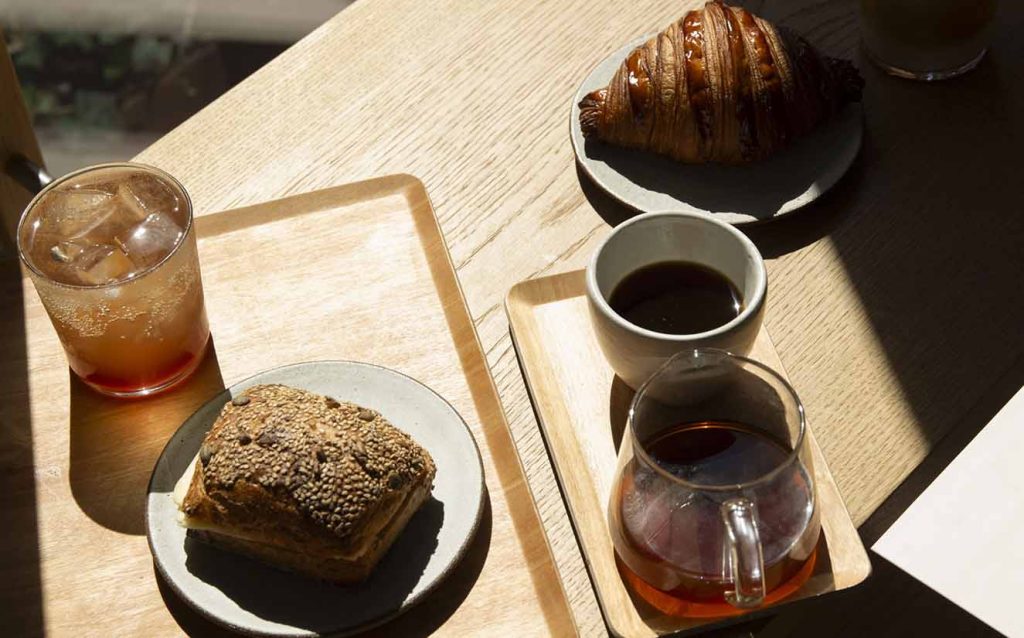
There are cafés and then there is La Cabra. The name came up in every conversation when I asked where to find serious coffee in Aarhus. Located on Graven, one of the oldest streets in the Latin Quarter, La Cabra’s interior is the sort of modern Scandinavian design that gets photographed endlessly—light wood, open shelves, quiet hues. The coffee is made with slow devotion, and it shows.
I ordered a hand-brewed Ethiopian and found a seat near the window. On the small oak table before me: my new brass pen, the wabi-sabi book, and a fresh notebook from Bøger & Papir. Outside, bicycles lined the street like punctuation marks, and across the way, a man with a weathered bag was selling used books from a folding table.
After finishing the coffee, I walked over. His name was Mads, and he ran the stand every Thursday and Saturday, depending on the weather. The books were mostly in Danish, but a few English-language gems hid in the stacks—an old edition of Hemingway’s A Moveable Feast, a pocket-sized Neruda in dual language, and an early printing of The Little Prince in French.
I bought all three.
6. Pen and Paper, Then the Sea
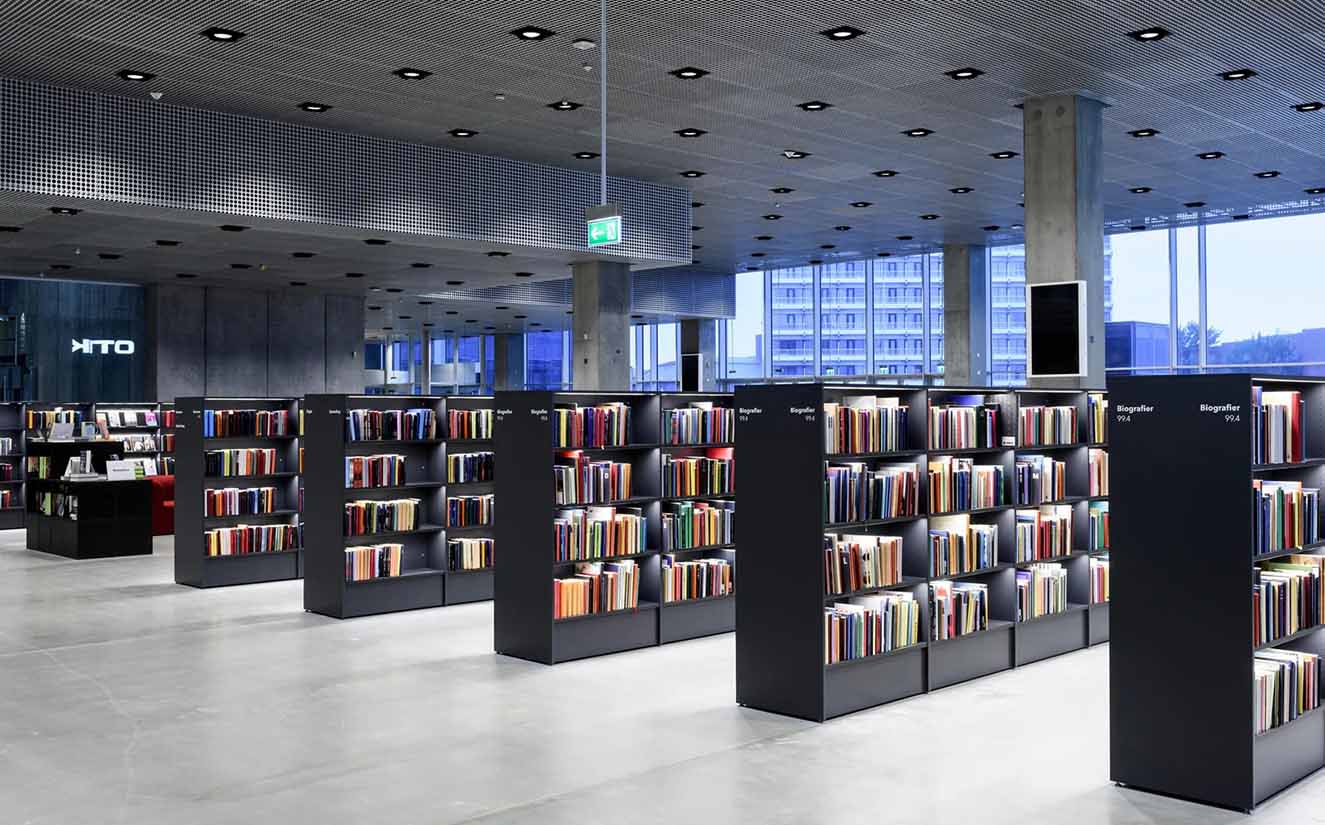
One afternoon, I walked to the harbor with nothing but a notebook and a book of poetry. The Dokk1 library loomed nearby, a temple of knowledge with its sweeping modern architecture and rivers of natural light. But I stayed outside. I sat on a low bench near the water’s edge, where ships rustled and the air carried both salt and the scent of pine.
The city behind me seemed momentarily paused. I opened the notebook and began writing—not with a goal, but with a sense of ease that had grown over days of slow wandering, reading, and quiet thought.
When I looked up, the light had shifted again. Aarhus doesn’t impose itself. It unfolds. You discover it not by seeking landmarks but by turning corners, entering shops, asking questions, watching the light. The bookstores, the coffee, the paper—all are part of the same rhythm. You don’t collect them. You inhabit them.
7. An Evening at Øst for Paradis and a Final Book
On my last night in the city, I visited Øst for Paradis, the local arthouse cinema named after East of Eden. It was raining again—Danish spring, after all. I watched a film I hadn’t heard of, something French and slow and deeply human. After the film, I wandered down the street and found a late-night bookstore still open.
Inside, a single lamp lit the desk. The owner looked up and smiled. We spoke little. I picked up one final book—Danish folk tales translated into English, bound in deep blue cloth.
It felt like a farewell gesture from the city itself.
Embark on an Unforgettable Journey: Explore, Experience, and Enjoy!
- Enchanting Escapades at Disneyland Paris: A Magical Journey Awaits! : Step into a World of Wonder, Where Dreams Come to Life! Experience the Magic at Disneyland Paris – Where Every Moment is a Fairytale Adventure!
- Gatwick Airport Parking: Secure, Convenient, and Stress-Free! : Park with Confidence, Travel with Ease! Discover Hassle-Free Gatwick Airport Parking for a Seamless Start to Your Journey!
- Air France - Elevating Travel, Embracing Elegance! : Journey Beyond Boundaries with Air France: Where Every Flight is a Symphony of Style and Comfort!
- EasyJet Holidays - Effortless Escapes for Unforgettable Adventures! : Simplify Your Getaway with EasyJet Holidays: Where Every Moment is Packed with Joy. Your Dream Vacation, Made Easy!